
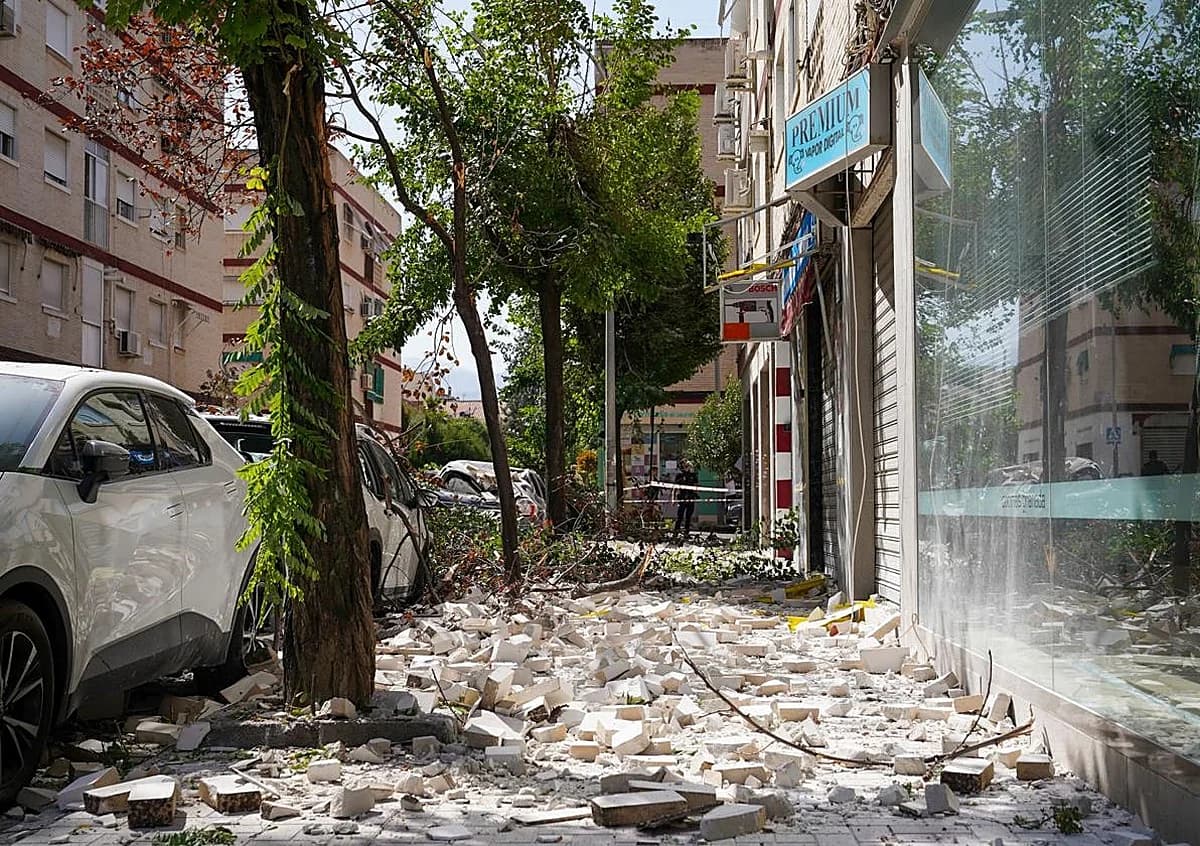
Granada was shaken by a fresh round of tremors on Tuesday morning, the strongest measuring magnitude 4.8 and striking at 10:37am local time with its epicenter close to the town of Gojar, roughly 10 kilometers south of the city. Spain's National Geographic Institute recorded the quake as a shallow, surface level event, which explains why residents across Granada felt it so sharply.
Three people suffered light injuries. A young girl was taken to hospital for treatment, while the other two were tended to at the scene. Emergency services said they fielded more than 500 calls within hours, many reporting cracked walls, fallen chimneys, dislodged building facades and damaged vehicles across the city and surrounding towns.
Tuesday's shaking was not an isolated event. Within roughly an hour, the area recorded three separate tremors above magnitude 4, part of a swarm that has rattled the province for days. A magnitude 5.0 quake struck the same area shortly after 1am on Saturday, an event officials described as one of the strongest to hit Andalusia in decades. No injuries were reported at the time, though it left cracks in several buildings.
The Alhambra, Granada's best known landmark and one of Spain's most visited monuments, suspended visits for the rest of the day as a precaution. The Nasrid Palaces were also closed while engineers checked for structural damage, though the Generalife gardens and the Partal remained open to the public.
The disruption spread beyond the monument. Granada's metro operator cut train speeds to 30 kilometers per hour along the network, several hotels evacuated guests as a safety measure, and municipal buildings across the city shut their doors, with staff sent home except for emergency personnel.
Regional officials urged calm but acknowledged the seismic activity is likely to continue. One official said residents should stay informed on how to respond safely if the tremors persist, noting that aftershocks of this kind can carry on for some time after an initial quake.