
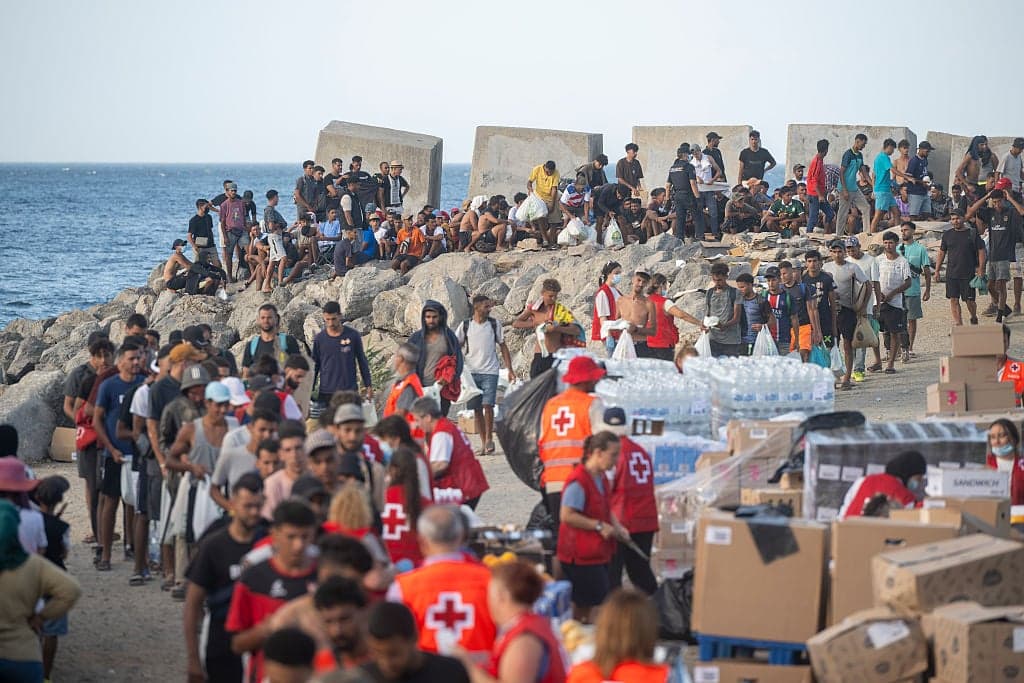
The Spanish government has toughened its response to irregular migration weeks after tens of thousands of people crossed the border into Ceuta from Morocco. Interior Minister Fernando Grande-Marlaska traveled to the autonomous city to oversee the operation and made clear that those who entered without authorization will not be allowed to remain in the enclave, travel to mainland Spain, or obtain legal status, except in rare cases of extreme vulnerability.
According to the ministry, people with no right to remain in Spanish territory are being returned to Morocco. Authorities have already confirmed the return of more than 48,000 people since the crisis erupted in late July, alongside installing an additional maritime barrier and deploying more officers from the mainland to prevent another mass crossing.
Pressure at the border has persisted in recent weeks. In mid August, Moroccan police arrested around a hundred people trying to enter Ceuta after calls circulated on social media for another mass crossing, prompting both countries to tighten security at the border crossing.