Spain Faces Risk of Another Major Earthquake in Granada, Experts Warn
Geophysicists consulted after August's earthquake swarm warn that the Granada basin remains exposed to another quake of around magnitude 5, though they stress that science cannot predict exactly when or where it will strike.
Weeks after the earthquake swarm that shook Granada in mid August, experts warn the region remains exposed to the risk of another quake of around magnitude 5. The exact timing is impossible to predict, they say, though the intensity of aftershocks has been declining since the peaks recorded earlier in the month.
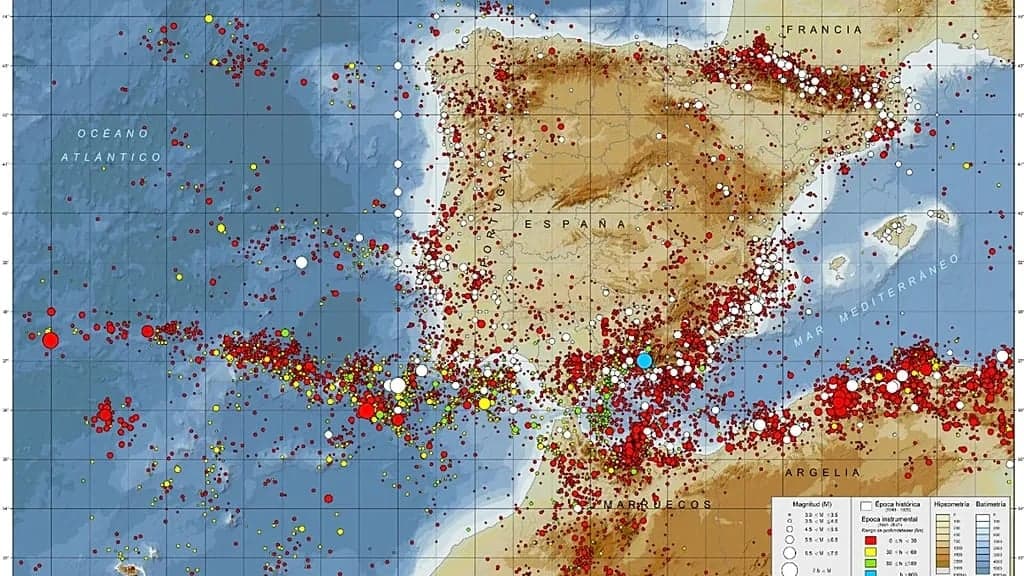
The Granada basin is one of the most seismically active areas of the Iberian Peninsula and has recorded some of the strongest earthquakes in Spain's recent history. The National Seismic Network describes the area as "highly dangerous" because of the number of faults capable of generating earthquakes, many of them still not fully mapped.
Mercedes Feriche, of the Andalusian Institute of Geophysics, explains that energy released by one earthquake can transfer into neighboring faults, building up tension until those faults rupture too, which would explain why the strongest tremors have jumped between different epicenters rather than repeating in a single spot.
The current swarm began on August 13, with two magnitude 4.8 earthquakes on the 15th and 18th, preceded by smaller tremors of 3.1 and 3.6. Nieves Sanchez Guitian, of the Ilustre Colegio Oficial de Geologos, says Granada and Malaga are Spain's highest earthquake risk zones, while Raul Perez Lopez, of IGME-CSIC, compares the current sequence to the 2021 Atarfe-Santa Fe swarm, which kept producing aftershocks for months, including a magnitude 4.4 quake seven months after the main event.
The material toll from this August already stands at 217 buildings requiring preventive work and 47 declared unsafe, with six apartment blocks evacuated and 371 homes left empty as residents shelter in youth hostels while inspections continue. Scientists stress that earthquakes "cannot be predicted, only described once they have happened," and recommend the area stay on alert in the coming months.