
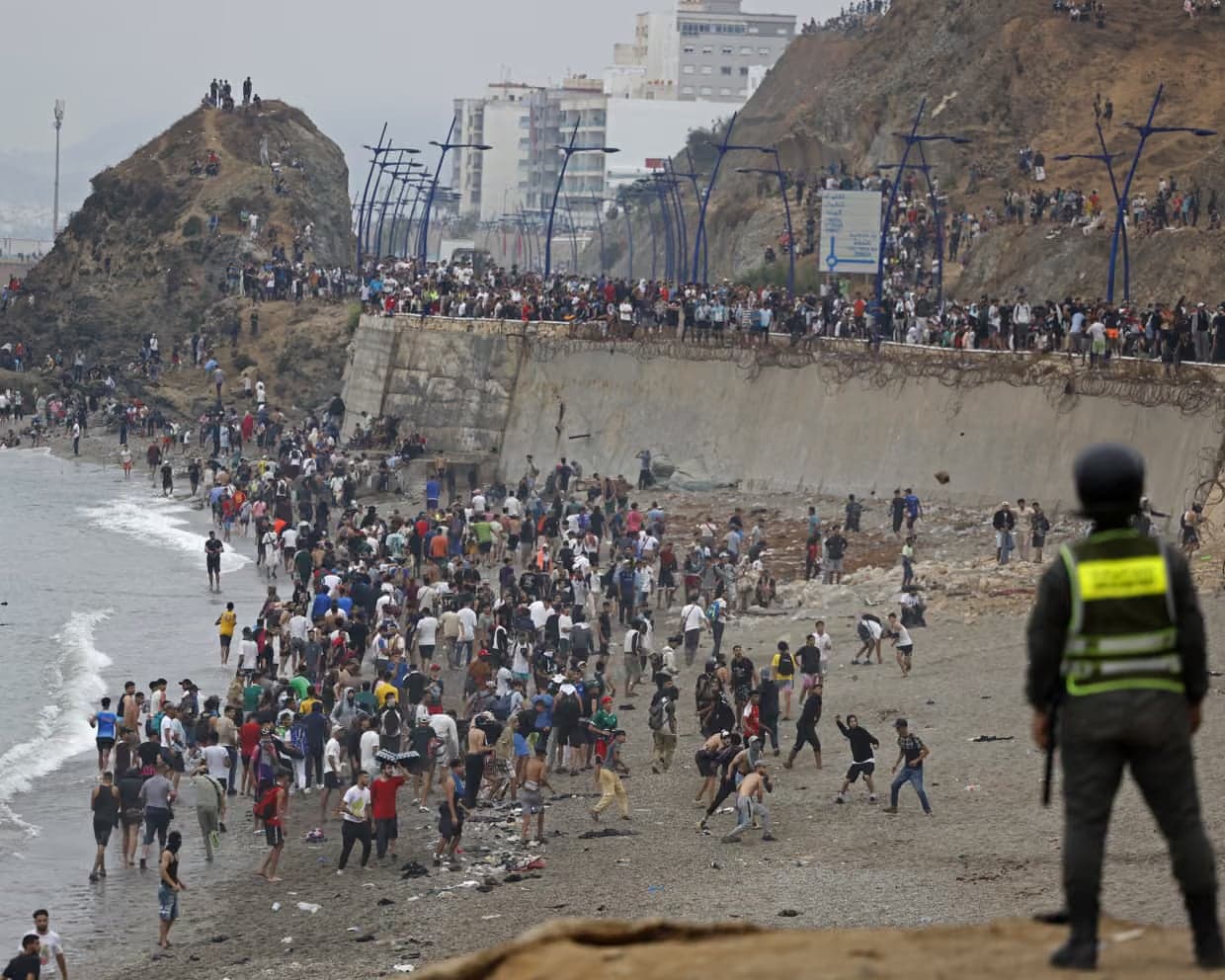
Tens of thousands of people took to the streets last Wednesday in several Spanish cities to protest the handling of the Ceuta migration crisis, a month after tens of thousands crossed the border from Morocco. In Madrid alone, authorities put the crowd at around 50,000 people, with rallies also held in Barcelona, Valencia and Seville.
Protesters, waving Spanish flags and blowing whistles, chanted slogans including "Ceuta is not for sale, Ceuta must be defended," with some shouting "expel the invaders" at points along the marches. The protests called for migrants to be returned to their countries of origin or redistributed across the rest of Spain.
Ceuta's regional leader, Juan Jesus Vivas, described the crisis as a "violation of Spain's territorial integrity," while territorial policy minister Angel Victor Torres accused the opposition of exploiting the situation "to attack the government of Spain." Prime Minister Pedro Sanchez, for his part, blamed the surge on a misinterpretation of a court ruling combined with the spread of online disinformation.
Nearly five weeks after the mass crossing, the government puts the number of migrants still in Ceuta at around 5,000, including 1,200 minors, though local sources give a higher figure. The strain has led to isolated incidents of violence, including fights, the stoning of a military patrol, reports of sexual assault and clashes with police, along with residents burning belongings left by migrants.
Amid the noise of the protests, other voices were heard too. Halima Ahmed, of the NGO Luna Blanca, called for "a little bit of empathy" toward people she described as being in a vulnerable situation, while Otman Ianaya, one of the migrants who arrived in Ceuta, summed up his reasons simply: "There is no work in Morocco. I want to build a future in my life."