
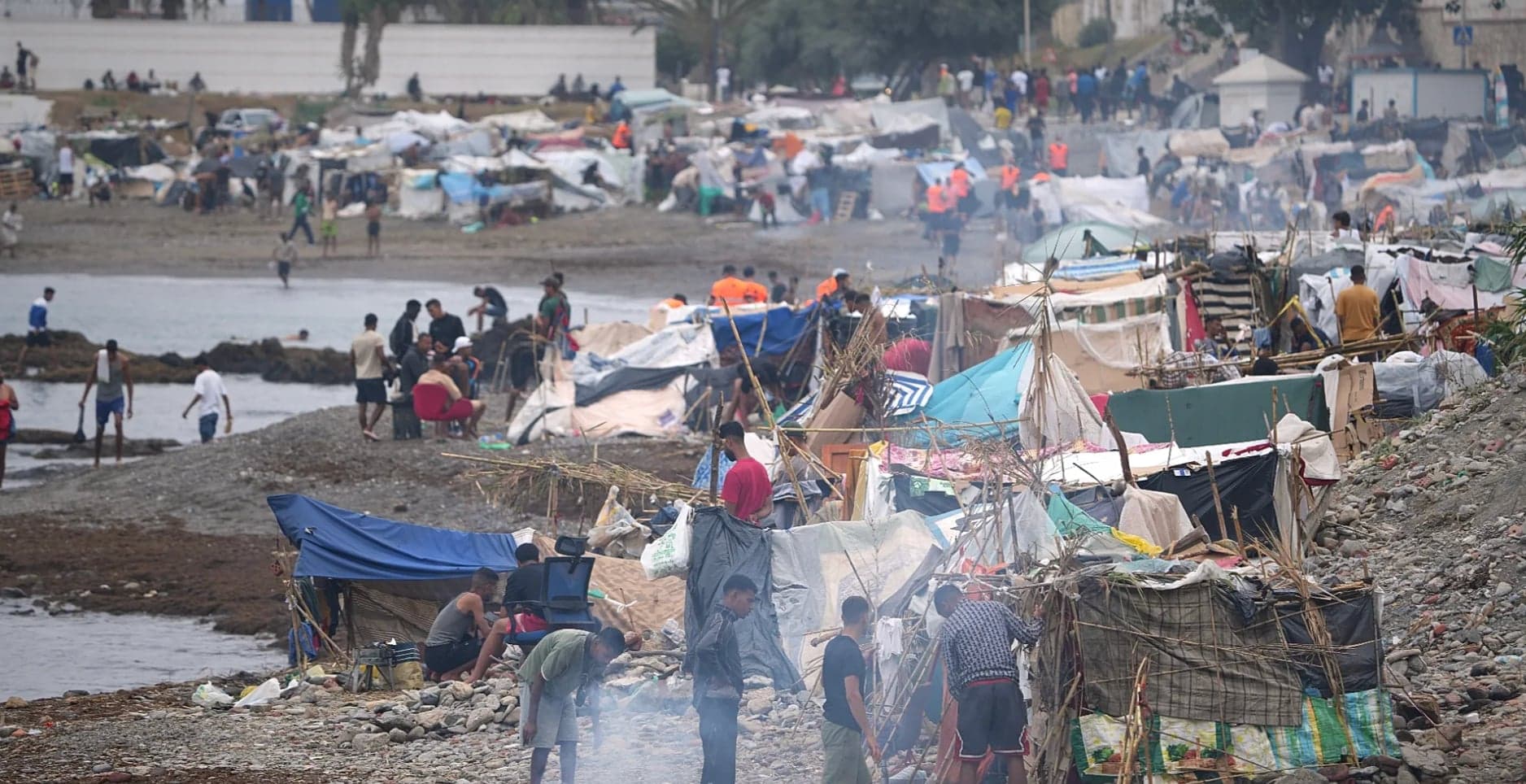
The European Commission has approved 114.7 million euros in emergency aid for Spain to manage the Ceuta migration crisis, in what the EU institution describes as a gesture of solidarity with Madrid following the mass crossings of July 30 and 31, when more than 70,000 people entered the enclave from Moroccan territory according to initial official Spanish figures.
The funding comes from two separate instruments: 82.7 million euros from the Asylum, Migration and Integration Fund, and a further 32 million from the Border Management and Visa Instrument. Under the planned payment schedule, up to 80 percent of the aid will be disbursed within 30 days of the grant agreement being signed, with the assistance covering expenses retroactively from the first day of the crisis.
The money will go toward reinforcing border surveillance and security infrastructure, including thermal cameras, monitoring systems, buoys and underwater drones. It will also allow for the deployment of additional staff and equipment, the creation of facilities for screening migrants, support for returning those in Ceuta irregularly, and a boost to the city's reception capacity, including care for unaccompanied minors.
Foreign Affairs Minister Jose Manuel Albares traveled to Brussels to meet with EU Home Affairs and Migration Commissioner Magnus Brunner and the bloc's top diplomat, Kaja Kallas. Albares argued that "Europe's southern borders are as important as those of eastern Europe" and raised the possibility of a permanent Frontex presence in Ceuta and Melilla.
Spain had already requested additional operational support in late August, coordinating the deployment of Frontex, Europol and the EU Asylum Agency to both Ceuta and Melilla, in an effort to strengthen the joint European response to a crisis that continues to dominate Spain's political agenda more than a month after it began.