
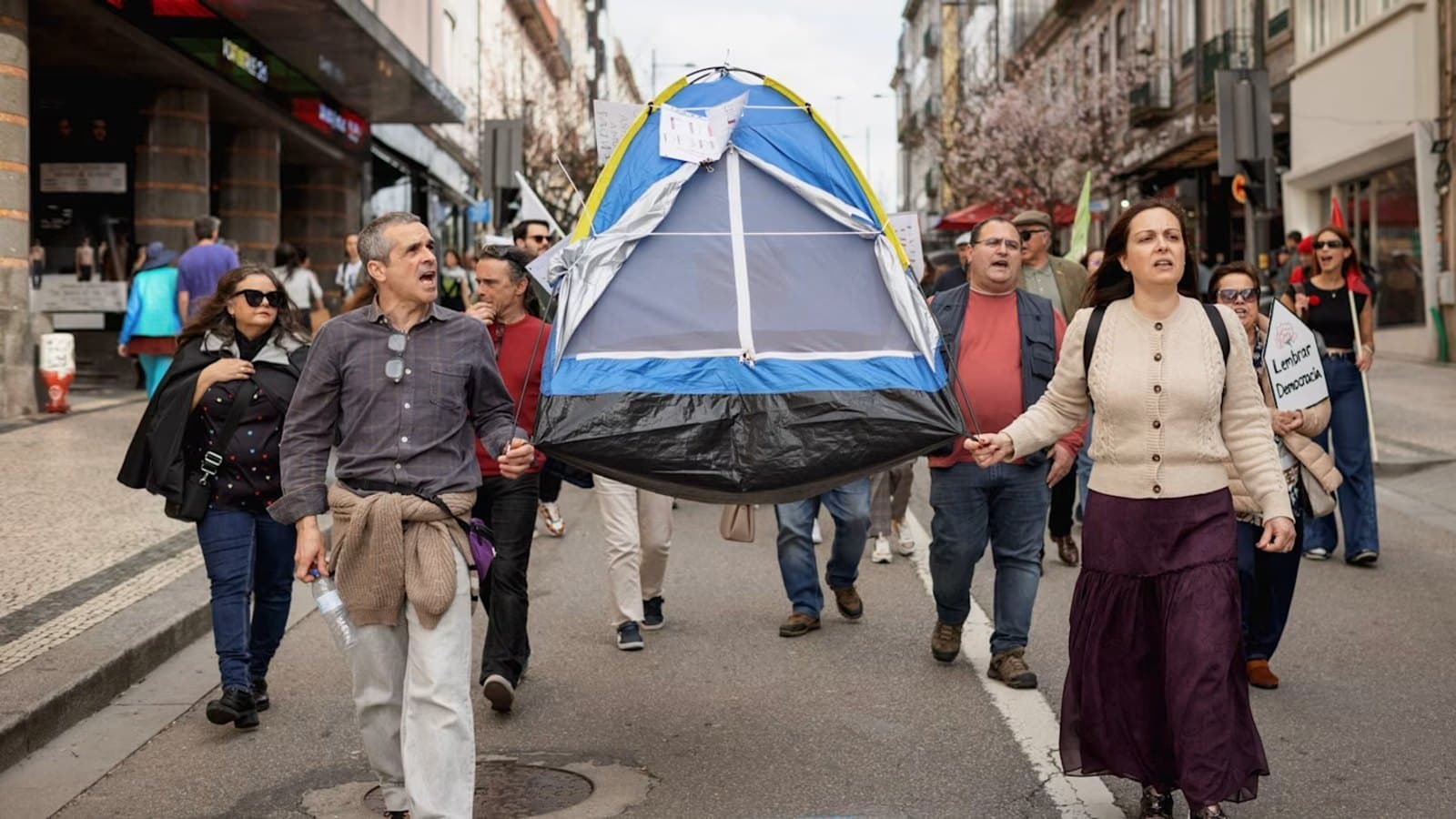
Protesters marched through sixteen Portuguese cities in a coordinated demonstration organized by ninety separate organizations under the banner of Casa para Viver, a coalition of tenant unions, municipal groups and labor federations. Their chant summed up the arithmetic behind the march: ja nao da, we can't take this anymore.
The numbers back that up. Rent now consumes between 35 and 50 percent of median household income in Portugal's major cities, well past the roughly 25 to 30 percent European benchmark for what counts as affordable. In Lisbon, the average apartment sells for around 4,500 euros per square meter, putting a typical 100 square meter flat at close to 450,000 euros, about 15 times the annual salary of a typical teacher or nurse.
Supply is not keeping pace, and the numbers explain why prices keep climbing at a forecast 7 percent a year. Portugal has 723,000 vacant properties sitting idle while only about 26,000 new housing units get built annually, against an estimated need of 45,000 to 48,000. The coalition wants state built social housing at scale, rental ceilings capped at 25 to 30 percent of income, ten year minimum lease terms, tax penalties on vacant homes and speculators, and tighter restrictions on short term tourist rentals.
The government's actual moves have gone the other way on the headline issue. It eliminated its rent cap on new contracts, a cap that had limited annual increases to 2 percent until it was scrapped in September of last year, and it has accelerated eviction procedures rather than slowing them. It has offered smaller concessions elsewhere: tenant tax deductions rising from 700 euros to 900 in 2026 and 1,000 in 2027, a mortgage payment freeze at February 2026 levels, and a still vaguely defined emergency housing fund.
The coalition delivered its manifesto directly to President Antonio Jose Seguro rather than to parliament, a choice that says something about how much room protesters see in the current chamber. Portugal's next parliamentary election is not scheduled until 2028, which leaves the people marching with rent bills due every month and a government they cannot vote out for two more years.