
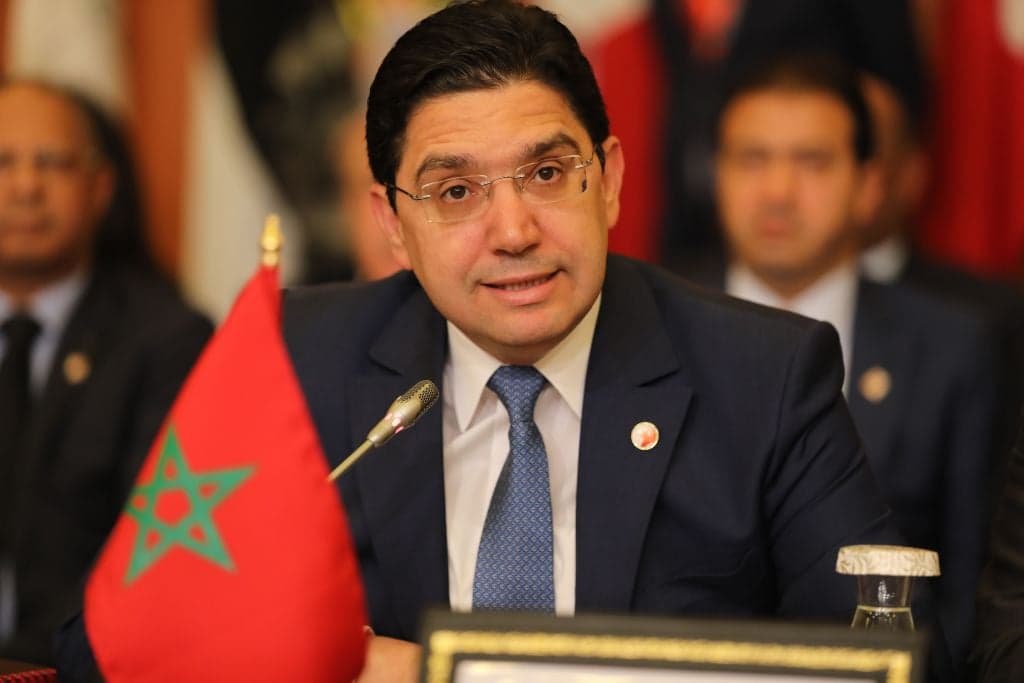
Morocco's Foreign Minister, Nasser Bourita, accused Spain of holding back the return of migrants who crossed en masse into Ceuta in late July, after meeting his Spanish counterpart, Jose Manuel Albares, on the sidelines of the United Nations General Assembly in New York.
Bourita told reporters that the obstacles to completing the returns were "controversies, procedures and difficulties" on Madrid's side, not a lack of will in Rabat. He added that if irregular migrants and unaccompanied minors have not returned to Morocco, the question should be put to Spain, not to his country.
According to the latest official figures, provided on September 22 by territorial policy minister Angel Victor Torres, more than 7,000 people have returned to Morocco since August 10, including 6,791 voluntary returns and 318 expulsions. Despite that figure, more than 6,000 adults remain in state run facilities, while Ceuta has formally identified 2,321 unaccompanied minors, with several hundred more still living on the streets.
Spanish government sources attribute the slow pace of the process to unavoidable legal requirements: each person must be individually identified and interviewed, protection claims are examined case by case, and return decisions follow formal judicial procedures that also run up against limited court capacity. For minors, the law requires an individual assessment of each child's circumstances and prioritizes family reunification, meaning the same procedures used for adults cannot be applied.
The exchange of accusations adds to other fronts that have opened between Rabat and Madrid in recent weeks, including the leak of a police report suggesting possible Moroccan passivity during the mass crossing and the mutual accusations of blackmail and cover up that have marked the bilateral relationship since the crisis erupted.