Prime Minister Pedro Sanchez on Monday evening rejected allegations that he is being blackmailed by Morocco over the Ceuta migration crisis, calling the claims fit for "a Netflix series" rather than political reality.
The allegations, pushed by the Popular Party and its leader Alberto Nunez Feijoo, suggest Sanchez is reluctant to confront Morocco over the late July mass crossing because Rabat may be pressuring him with information obtained by hacking one of his phones. The PP has revived the Pegasus case for this purpose, the spyware program that in 2022 infected the phones of Sanchez himself and several members of his government, including then Defence Minister Margarita Robles.
"These false reports circulating about the phone or other matters, well, perhaps for a Netflix series they are great, but reality must be built on facts and not on false news," Sanchez said, insisting that "there is no information that solidly establishes Morocco's responsibility" for the wave of arrivals Spain faced on July 30 and 31.
The prime minister added, however, that he has never ruled out a firm response toward Rabat if its involvement were proven. "I have never said that we would not respond firmly to Morocco if it is proven that Morocco is behind what happened on July 30 and 31," he said, in an apparent attempt to dispel doubts about his government's resolve without formally accusing Moroccan authorities.
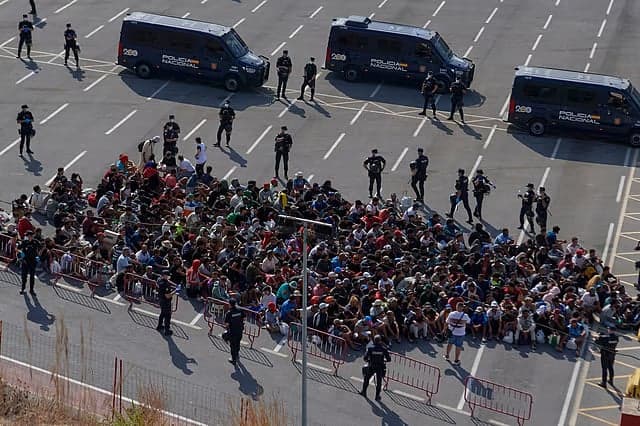
Since more than 70,000 people entered the Spanish enclave from Morocco in late July, Sanchez has consistently maintained that he has no "solid proof" that Rabat planned the surge, a position that has not convinced opposition parties or, according to various polls, much of Spanish public opinion.