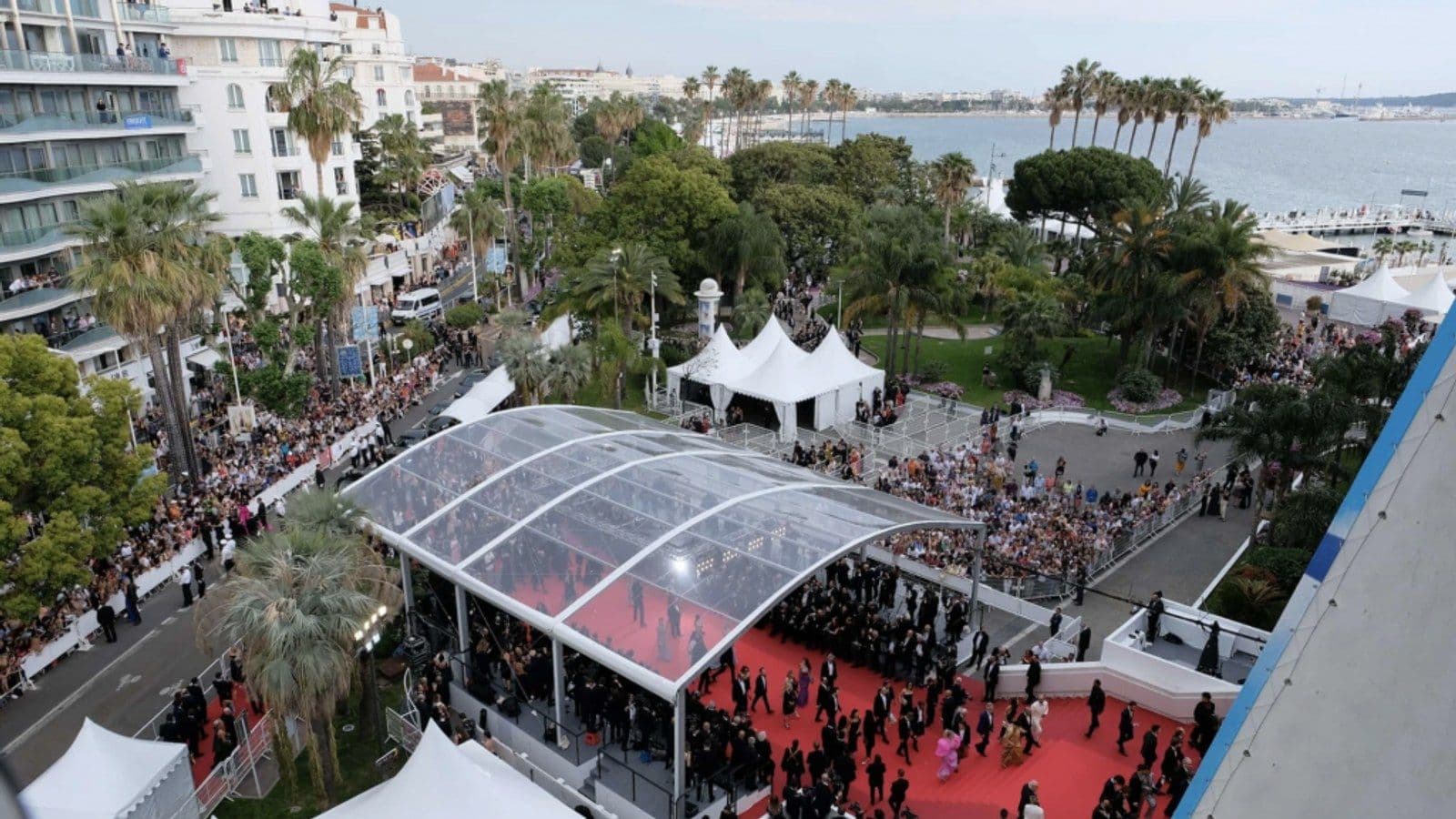
Spain has three films in competition for the Palme d'Or for the first time. Pedro Almodovar is there with Amarga Navidad, Rodrigo Sorogoyen with El ser querido, starring Javier Bardem and Victoria Luengo, and Javier Calvo and Javier Ambrossi, the pair known as the Javis, with La bola negra. The previous best was two in a single year.
The comparison sometimes offered, that four Spanish titles screened at Cannes in 1951 and in 1954, does not hold. The Palme d'Or did not exist until 1955, so those were films at a festival rather than films in a race. Three in the Official Competition is the record on the terms the prize has actually been awarded under.
The three names are the more interesting part. Almodovar is the fixed point of Spanish cinema abroad and has been for forty years. Sorogoyen arrives from a run of tightly built dramas with Bardem attached, which is the combination that turns a national reputation into an international one. The Javis came out of television and a musical sensibility that has almost nothing to do with either, and their presence is the clearest signal that the pipeline into Cannes is no longer one auteur wide.
Spain also has two international co-productions in Una cierta mirada: El deshielo, directed by the Chilean Manuela Martelli and produced by Maria Zamora, and La mas dulce, by Laila Marrakchi, featuring the Spanish actress Itsaso Arana. That is the layer under the headline, and it is where a film industry demonstrates depth rather than a single strong year.
The festival director Thierry Fremaux announced a 21-film Official Competition, with the South Korean director Park Chan-wook as jury president, the first from his country to hold the role. Fremaux framed the selection around what he called a need for gentleness, songs and nature in the Western world, and for security, prosperity and care in the countries of the Global South. Whether three Spanish films answer that is for the jury. That three of them are in the room at all is the thing that has not happened before.