
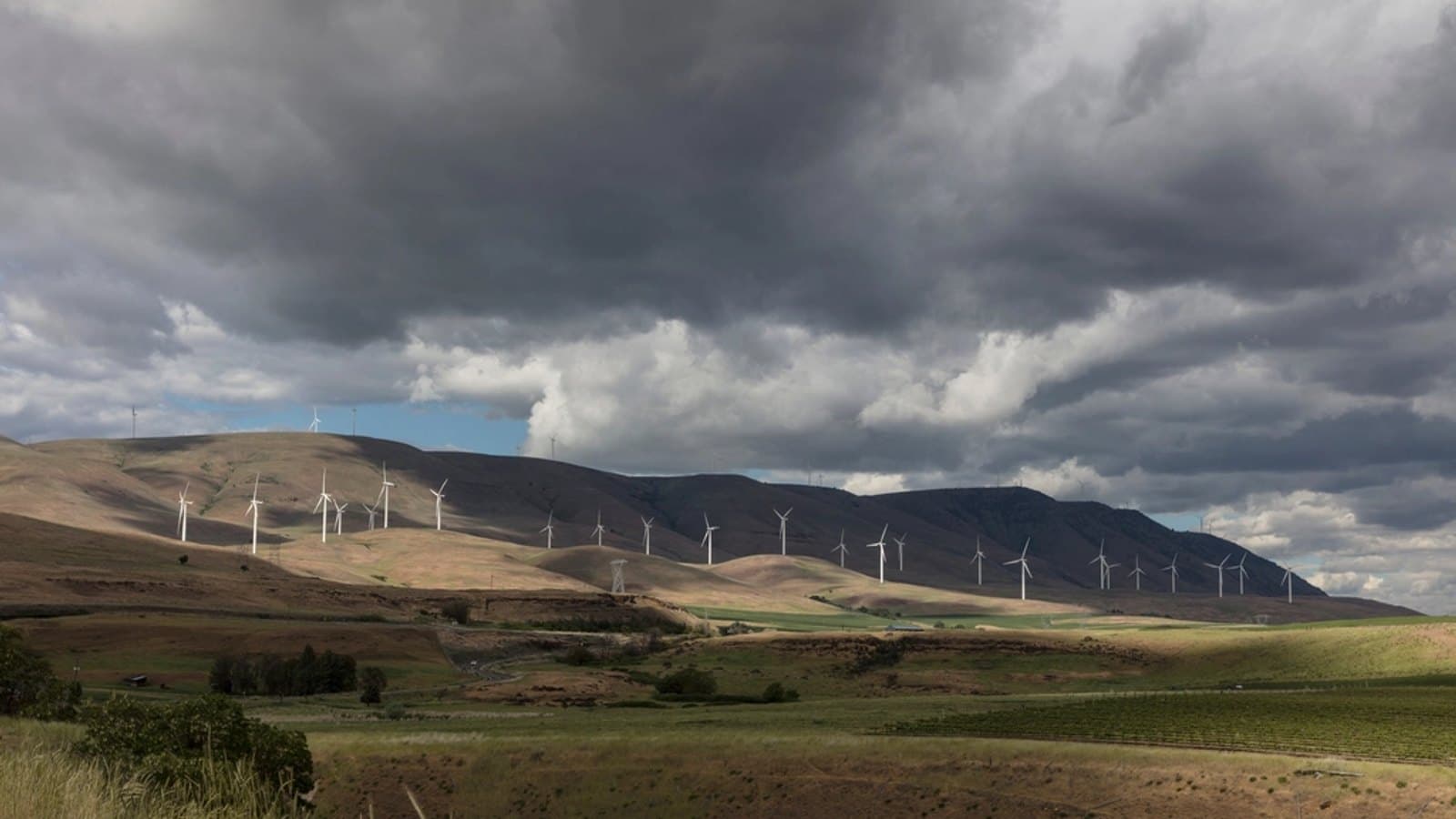
Acciona Energia is testing a hybrid storage system at the Barasoain wind farm in Navarre that combines ultracapacitors with lithium ion batteries. The installation is 1.25 megawatts and the objective is to validate new grid stability services for renewable generation. The technical interest is in why two storage technologies are needed rather than one.
Lithium ion batteries are good at energy and adequate at power. They will hold a large amount of charge and release it over minutes to hours, which is what a grid needs for shifting supply across a day. What they are less good at is responding within milliseconds to a sudden fluctuation, because the chemistry has a response time and the inverter has another.
Ultracapacitors invert that profile. They store very little energy and deliver it almost instantly, and they tolerate an effectively unlimited number of charge cycles. Pairing them lets the fast device handle rapid fluctuations while the battery handles bulk, which is closer to what a synchronous generator does naturally and what a grid full of inverters no longer has.
That capability is the thing renewable systems are short of. As conventional plant retires, the physical inertia that used to absorb sudden imbalances leaves with it, and it has to be replaced by something that reacts deliberately and quickly rather than by mass.
At 1.25 megawatts this is a validation exercise, not an installation that changes system behaviour. What it is trying to establish is whether the combination can be certified to provide stability services commercially, which is the step that turns an engineering result into something a grid operator can buy.