
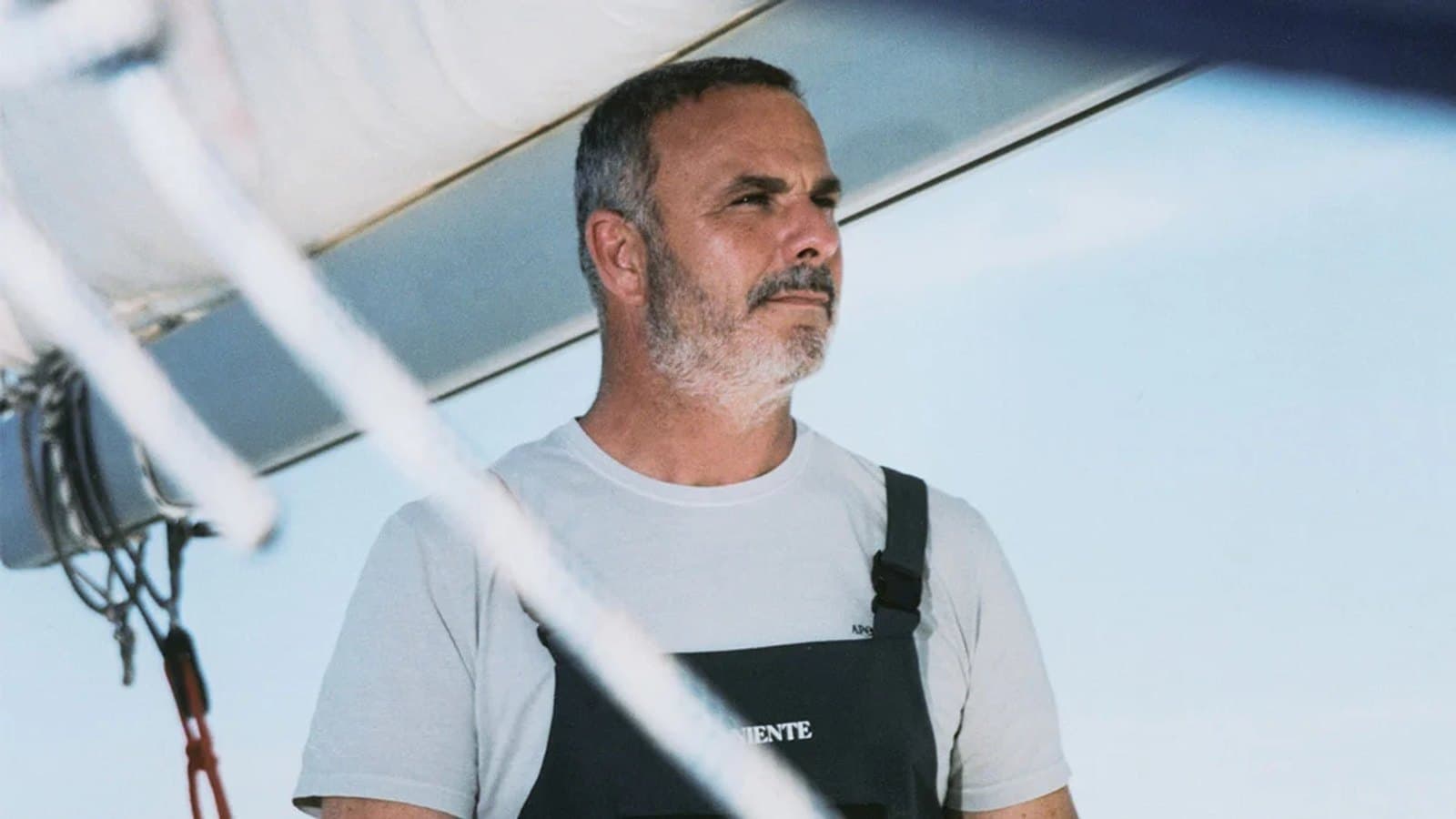
Angel Leon, the Cadiz chef known simply as the chef of the sea, answers a question about fear with a line that sounds more like a statement of purpose than an admission. He will be afraid, he says, the day the sea is no longer enough for him, because right now it is everything. It is not a metaphor he reaches for casually. Leon describes himself as naturally hyperactive, and says the ocean is the only part of his day that arrives without adverse thoughts attached to it.
That relationship with the water is built into how Aponiente, his restaurant, actually works. It sits inside a restored tidal mill, surrounded by marshland Leon spent three and a half years rebuilding using original eighteenth century plans, twenty hectares of it in total. Only one of those hectares actually supplies food to the restaurant. The other nineteen stay open to the public, which is itself a choice: the project was never built purely to feed paying diners.
What diners actually get is closer to a live demonstration than a themed evening. Leon has said explicitly that he has stopped trying to tell customers a story and started sitting them inside one instead, in a marsh where sailors, biologists and chefs work alongside each other and fish die fresh for each individual meal rather than arriving already caught. He credits nature itself as the real teacher in that setup, saying its lessons come through observation and hard knocks rather than anything that can be explained in advance.
The next thing he is building on that same logic is Marine Cereal, an attempt to turn Zostera marina, a seagrass, into a viable future protein source. The project moves from experiment to real scale in September, when the first large planting is due to go in. Separately, Leon is also involved in Amura, an educational cooking project in South Africa aimed at vulnerable communities looking for knowledge and a path to steady work, a version of the same idea applied to people rather than seagrass.
None of it changes what Leon actually does before any of his projects start each day. He sails out alone into the Bay of Cadiz at dawn, before the restaurant opens and before the marsh has visitors, because the silence out there is the part of the job that keeps the rest of it possible.