
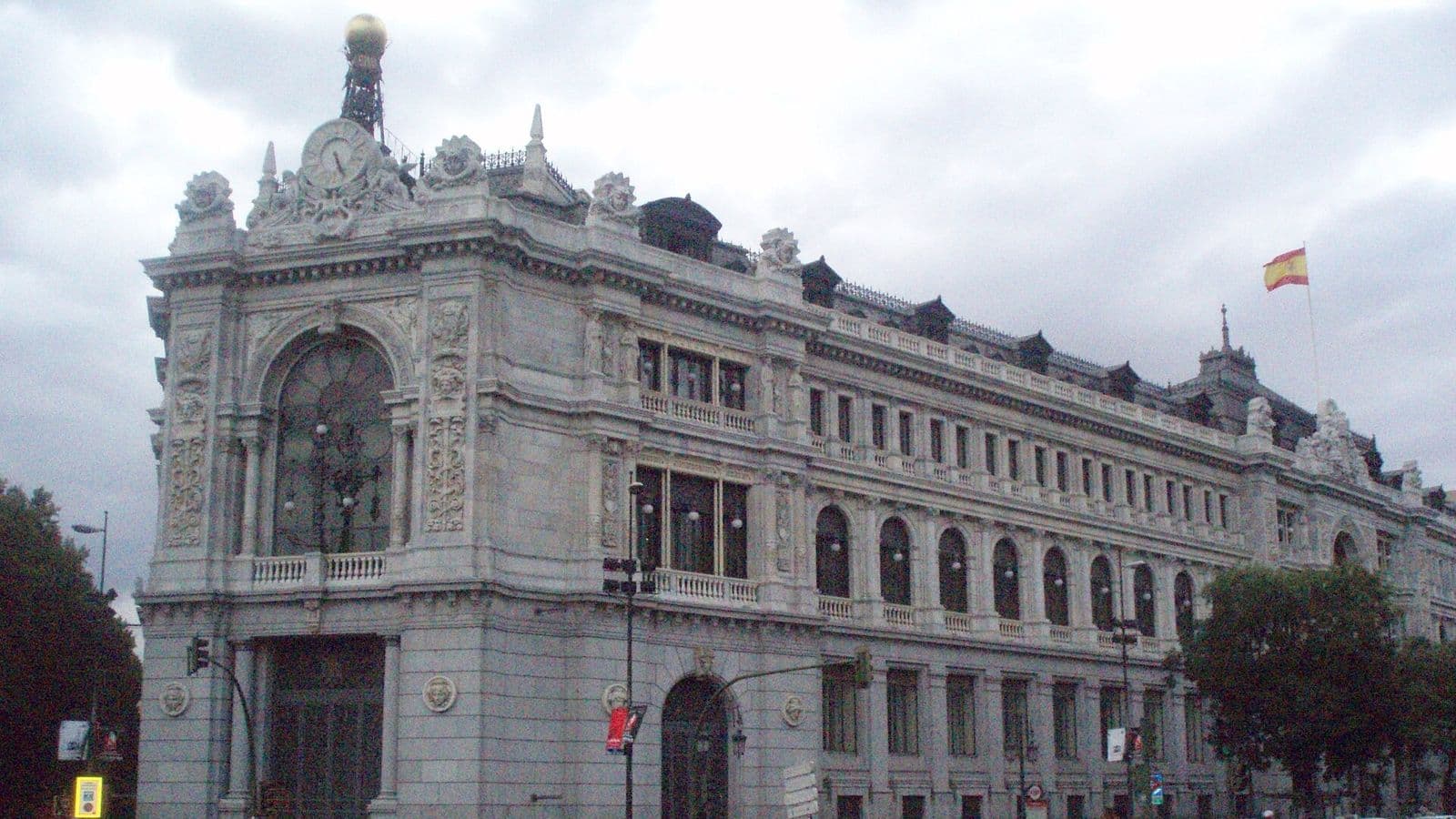
The Bank of Spain has left its 2026 growth forecast at 2.3 percent and its 2027 forecast at 1.7 percent, while raising its projection for inflation. Holding a growth number steady is usually read as confidence. Raising the price forecast alongside it is the part worth sitting with, because it says the composition of that growth is shifting rather than its size.
The 2.3 percent figure is a slowdown from the 2.8 percent recorded in 2025, and it still leaves Spain expanding faster than most of the euro area. The drivers have been consistent for three years: tourism at record volumes, domestic consumption that has not cracked, and immigration adding to the working population at a rate that mechanically lifts output.
Other forecasters sit around the same place without agreeing precisely. The government has been more optimistic, raising its own projection to 2.6 percent, while the International Monetary Fund has been more cautious at 2.1 percent. A spread of half a point across three serious institutions is a reasonable measure of how much of this depends on assumptions rather than observation.
The central bank named energy as the risk that would move it off the base case, which is a specific warning rather than a general one. Spain's growth story runs partly on cheap electricity and an unusually renewable grid, and both of those are advantages that a supply shock or a price spike can take away quickly.
The useful way to read the release is that nothing has changed in the level and something has changed underneath it. Growth of 2.3 percent with higher inflation is not the same economy as growth of 2.3 percent without it, and households will notice the difference before the forecast does.