
"Christmas is the only quarter of the year that lasts four months." The remark by Rafael López, national director of Sales & Trade Marketing Outsourcing at Randstad Spain, captures one of the main shifts in the holiday season: it starts earlier, stretches across more weeks, and demands increasingly complex planning.
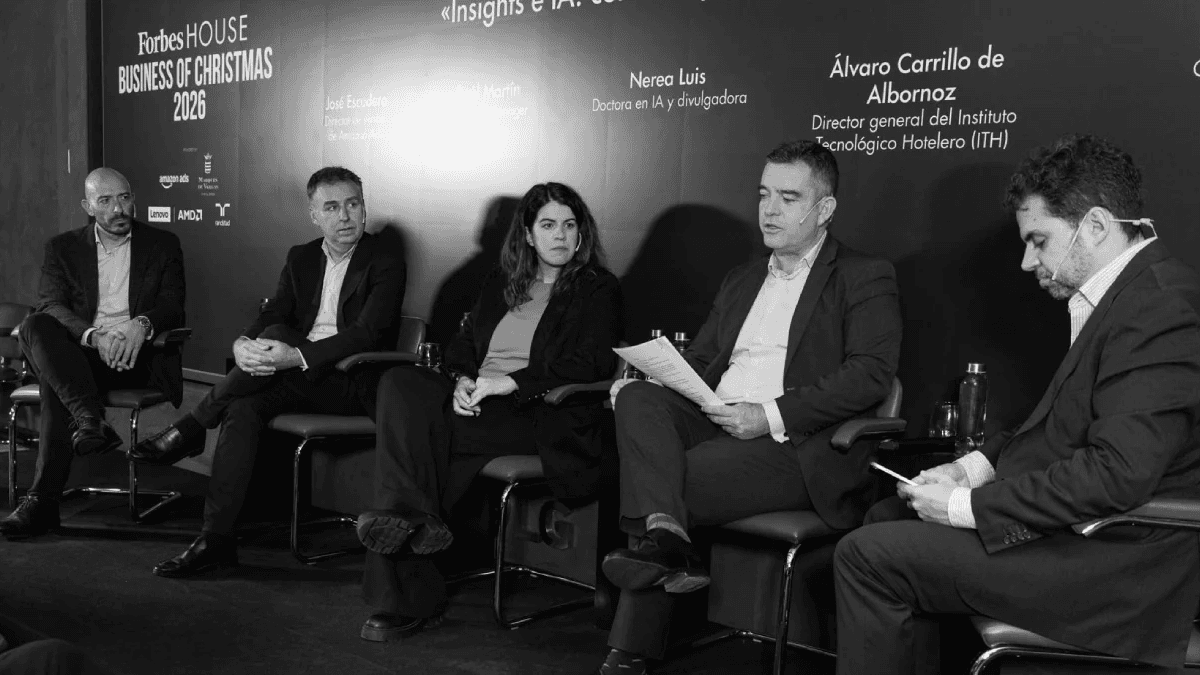
With that premise, Forbes House hosted a new edition of Business of Christmas on November 23, bringing together executives and experts from different sectors to examine what lies behind the Christmas campaign and how companies prepare for the surge in demand. The event was supported by Amazon Ads, Lenovo, Marqués de Vargas, and Randstad.
The first panel focused on the less visible side of Christmas: the people, routes, warehouses, and infrastructure needed to deliver products on time. According to López, the campaign generates around 200,000 contracts, two-thirds in logistics and one-third in retail, with hiring up 3% to 4% in logistics and 8% in retail. Madrid, Catalonia, and Andalusia account for more than half of the new hires.
María Luisa Romero, general manager of Palibex, explained that her network integrates 70 transport companies and begins feeling the rise in orders from late October. Her model does not compete on price but on service reliability. Dulsé Díaz Fresno, from CETM, agreed that transport arrives prepared but warned of a structural shortage of drivers, especially on long-distance routes, a profession that is becoming less attractive to younger workers.