
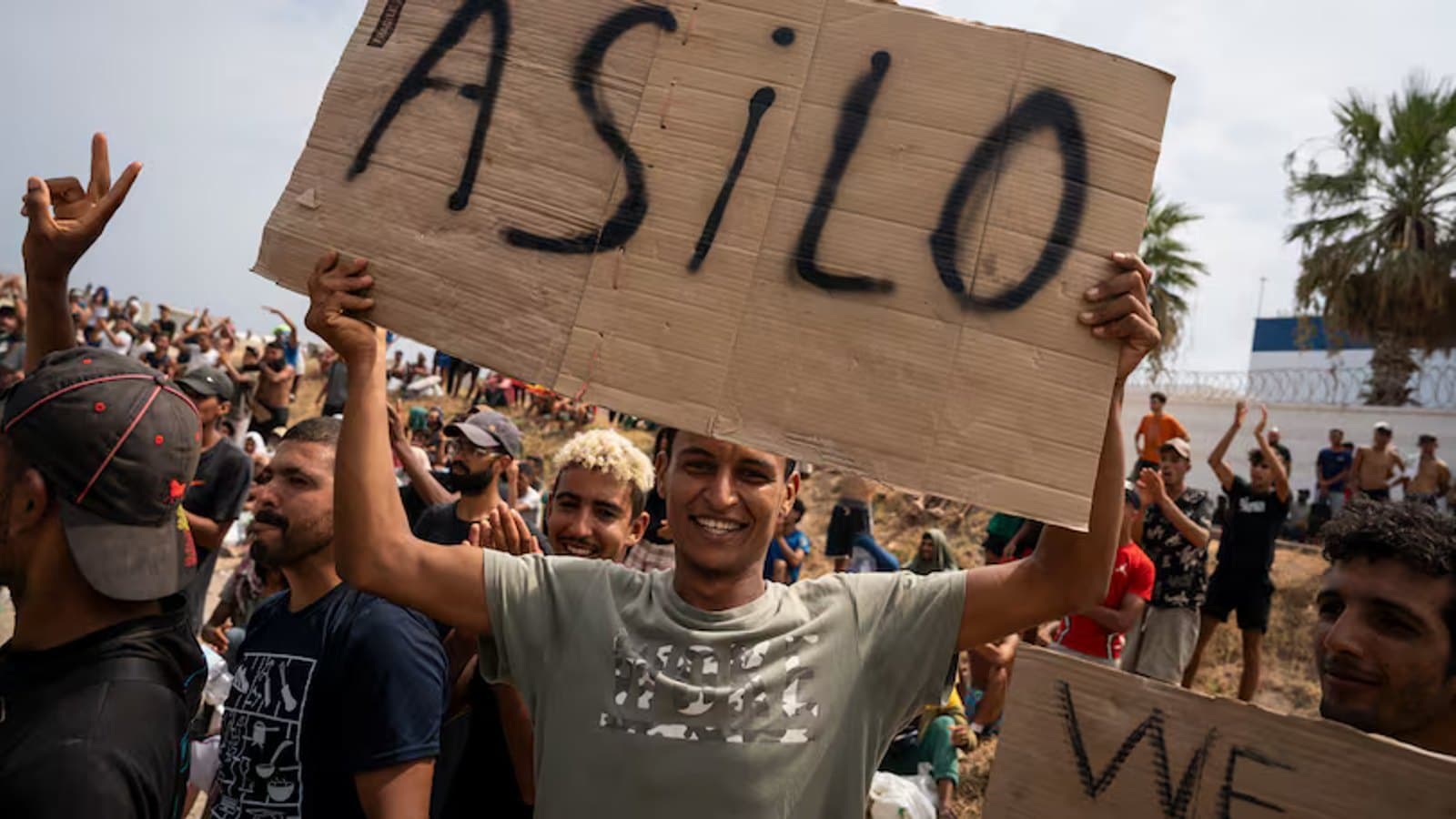
Ceuta's mayor president, Juan Jesus Vivas, has given Spain's central government 30 days to resolve the migrant crisis in the enclave before he takes the matter to court, telling reporters that Ceuta is living in exceptional times. His plan is to approach the presidents of Spain's Supreme Tribunal and Constitutional Court directly, an unusually pointed move for a local official against his own national government.
Behind the threat is a specific accusation: border workers say they warned Madrid in July that a surge was building, and that the government's response was minimal. That claim, if it holds up, would shift the story of the crisis from an unforeseeable shock to a warned about failure, which is exactly the distinction a legal case would need to establish.
One detail from before the crossing helps explain why so many people specifically swam rather than climbed the fence. A Spanish court ruling on June 29 allowed immediate pushback only at the physical border barrier itself, exempting people who entered the water, information that spread through social media and, investigators say, through criminal smuggling networks that used it to direct people toward the sea route. Meta and TikTok both activated crisis protocols during the surge to fight false claims circulating online that the border would open outright on August 15.
Between 5,000 and 8,000 migrants remain in Ceuta, down from the more than 72,000 who entered during the July 29 and 30 rush into a territory with a population of roughly 80,000. The death toll from that crossing is itself disputed along familiar lines, with Spain reporting 80 confirmed deaths and Morocco reporting 14, for a combined count of 94 that still falls short of the higher figures cited by rights groups elsewhere in the crisis.
The dispute has already reshaped travel between two EU members. Italy responded to the original crossing with passport checks on Spanish citizens, a direct breach of Schengen's border free arrangement, and Spain answered with identical checks on Italian citizens. Italy has said it will wait for its own intelligence agency's report before considering lifting the restrictions, leaving Ceuta's legal threat aimed at Madrid to play out against a backdrop where Spain is still trading border checks with one of its own EU neighbors.