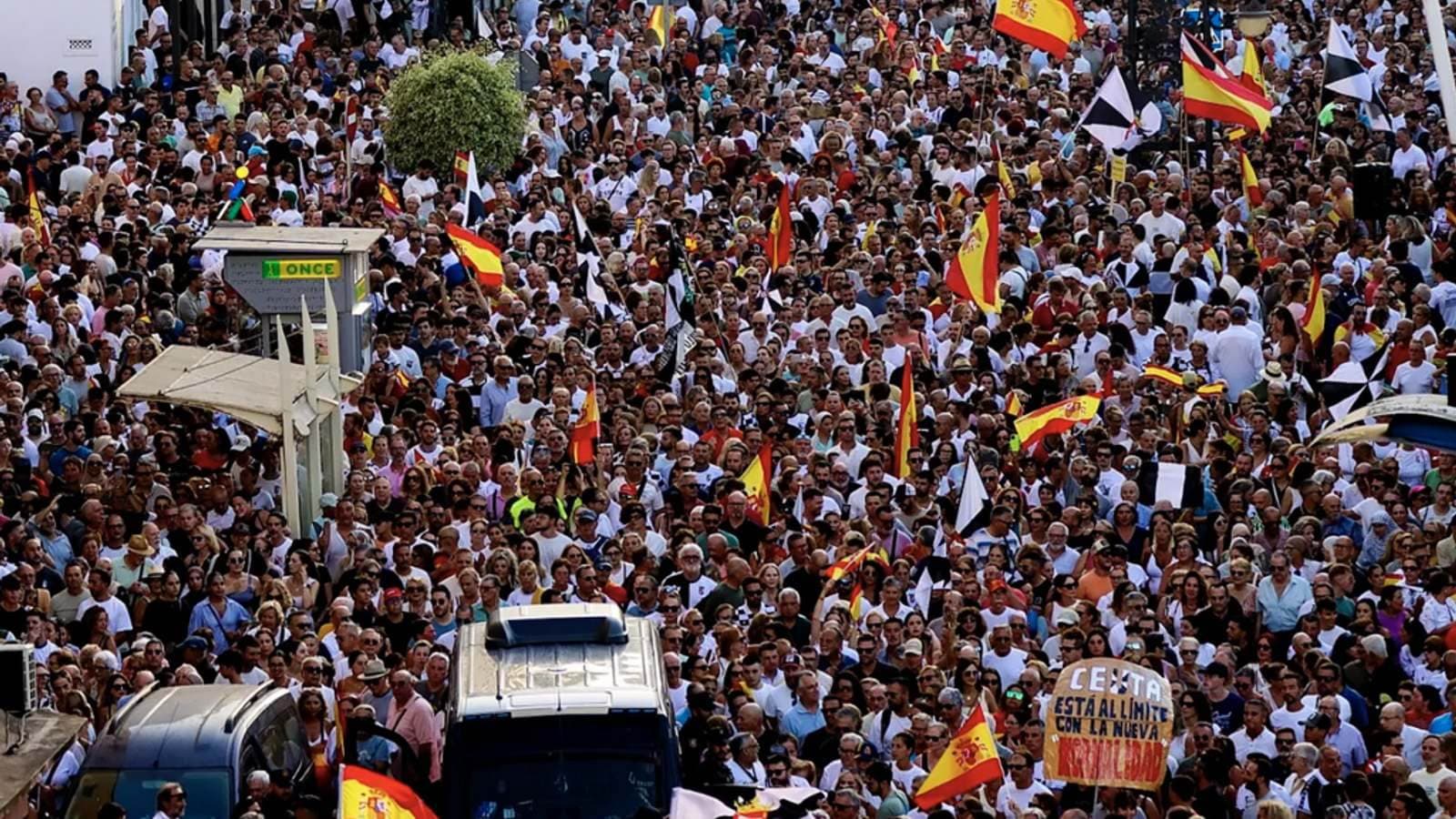
Thousands of people filled Ceuta's Plaza de la Constitucion for a rally called jointly by the city's four main religious communities, Christian, Muslim, Jewish and Hindu, demanding that Madrid respond to a migration crisis that has stretched the enclave for weeks. Organizers put the crowd at more than 10,000. The National Police counted just over 5,000. Even the size of the protest became one more thing the two sides could not agree on.
What nobody disputed was the message. Enough is enough, the crowd's own slogan read. Ceuta will not surrender. Ceuta's president, Juan Jesus Vivas, repeated the line twice from the stage, word for word: We are not going to surrender. We are not going to surrender.
The four communities organizing together was itself part of the point. Ramesh Chandiramani, president of the city's Hindu community, told the crowd that Ceuta is Spain, built, he said, by different religions and cultures living alongside each other. Trade unions UGT Ceuta and CCOO also backed the demonstration, framing the crisis as one that needs an institutional solution rather than a political fight.
The demands were specific: an urgent response from the central government, reinforced border security, more police resources, and an actual plan for the thousands of migrants still in the city. The numbers behind that last demand are large enough to explain the frustration on their own. More than 72,000 people have entered Ceuta irregularly since July 30, at least 141 have died in the attempt, and 1,342 unaccompanied minors have been identified among those who made it across.
The rally was not entirely unified in practice. Tensions flared briefly when the far right activist Vito Quiles showed up, with some in the crowd accusing him of using the demonstration for his own ends rather than joining it. The government's own representative in Ceuta, Miguel Angel Perez Triano, did not attend at all, and protesters chanted for prime minister Pedro Sanchez to resign, a reminder that even a rally built around unity could not fully separate the crisis from the politics around it.