
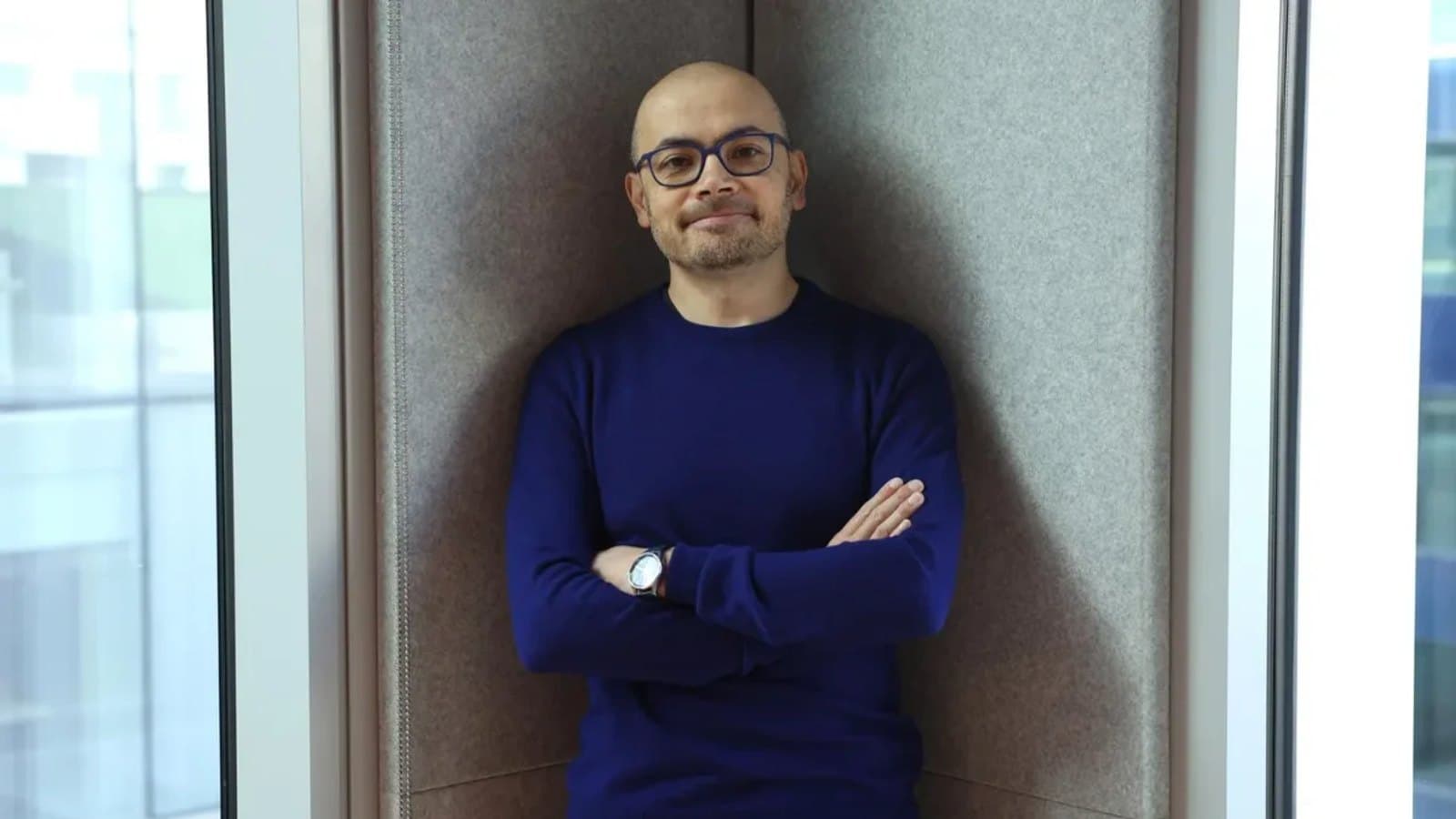
Google DeepMind announced a significant leadership shake up in August, and the changes read differently depending on which side of the Atlantic you ask. Demis Hassabis, the Nobel laureate who co-founded the lab, is stepping back from running it day to day to become Alphabet's chief scientist and president of Isomorphic Labs. Jeff Dean, employee number 30 at Google and the company's chief scientist, is leaving after 27 years to start his own venture, called Discover Loop.
The person taking over day to day leadership of DeepMind is Koray Kavukcuoglu, a Turkish born engineer who trained under Yann LeCun and had already served as the lab's technology officer before moving from London to Mountain View last year. His own relocation, and that of programming lead Sebastian Borgeaud, who made the same move from the UK to California, says something about which coast now runs the lab in practice.
Former staff describe a rivalry between the two offices that the restructuring has simply made public. Researchers based in London reportedly could read Mountain View's project files and documents, while the reverse was not true, a lopsided arrangement that built distrust over time. Computing capacity, the resource that determines what a research team can actually build, was fought over directly: before researcher Noam Shazeer left for OpenAI in June, the computing allocation for his Mountain View project was reportedly reassigned to a team based in London.
Splitting leadership across two continents also slowed the lab down in more ordinary ways, according to people who worked there, with decisions taking longer simply because they had to clear two time zones and two chains of command. One former employee described the shift toward Mountain View's way of operating as an Americanization of the lab, saying there is much greater tension in the American approach to who owns a project and who gets credit for it.
The stakes behind the reshuffle are larger than an office rivalry. Google held a real head start in AI research, tracing back to 2017, when Google Brain researchers invented the Transformer architecture that underpins nearly every large language model built since. It lost the public narrative anyway once OpenAI's ChatGPT captured attention, and eight of the original Transformer paper's authors have since left the company. Gemini 3 gave Google a genuinely strong result late last year, but a run of senior departures, Shazeer to OpenAI and Nobel laureate John Jumper to Anthropic among them, has left open the question of how stable the lab actually is underneath a good model.