
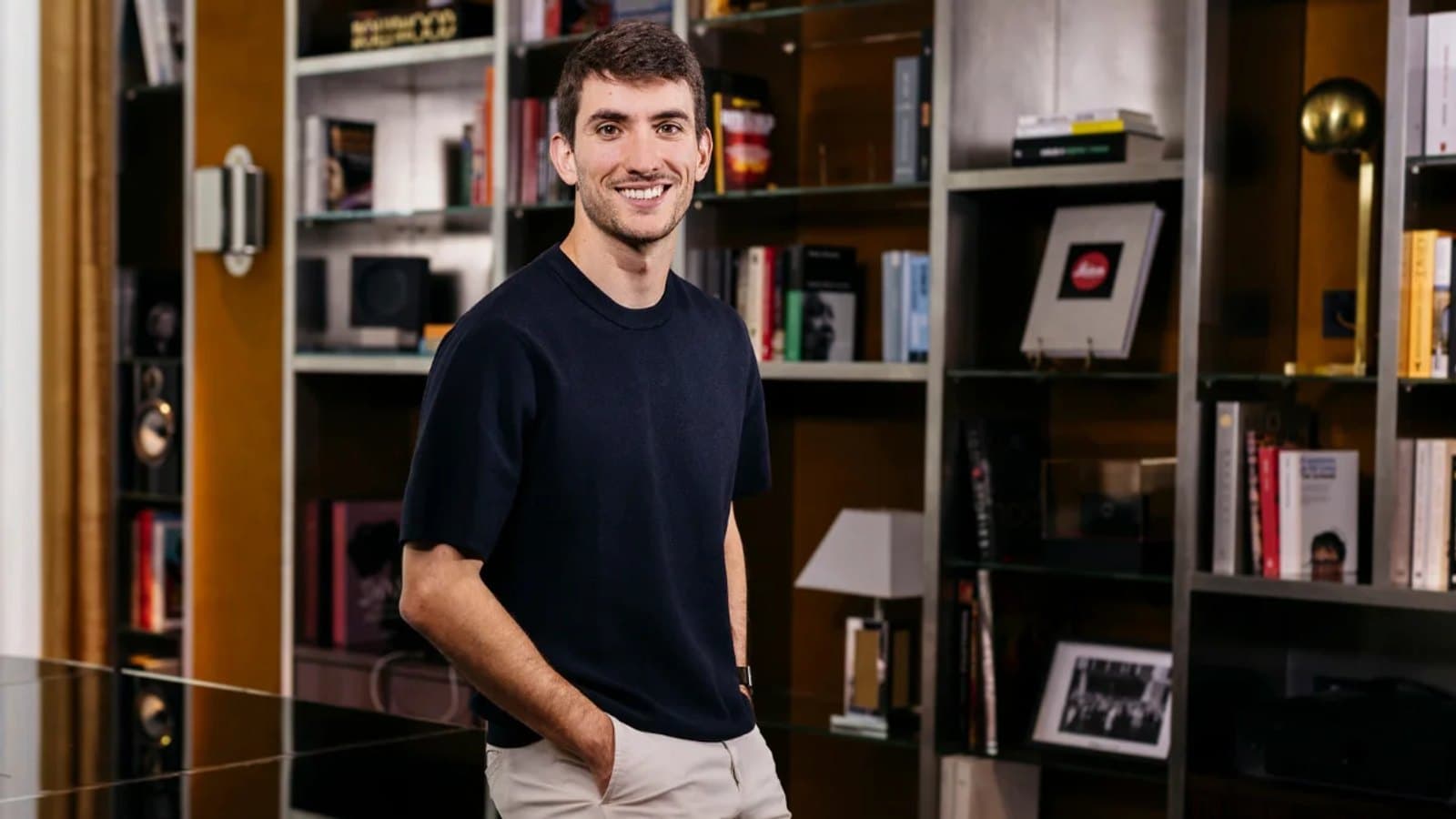
Pablo Palafox is 31, an engineer from Guadalajara, and the founder of HappyRobot, an agentic AI platform that just closed a Series C of 150 million dollars at a valuation of 1.2 billion dollars. That makes it Spain's youngest unicorn, and the pitch behind it is blunt: instead of writing software that assists a human, HappyRobot deploys AI agents that do the repetitive, transactional part of a job outright, sales calls, customer service tickets, back office paperwork, collections, while a person is left to handle exceptions, strategy, and anything that actually needs judgment.
Palafox's own path there was not a straight line. He studied industrial engineering, then took a master's in computer vision and deep learning at the Technical University of Munich, and was working toward a doctorate when an internship at Meta's Reality Labs changed his mind. He walked away from the PhD in 2022. He had also spent nineteen years at the piano before any of that, which is the kind of detail that means nothing about a business plan and everything about a person who finishes what he starts.
He built HappyRobot with his best friend from university, Luis Paarup, and his own brother Javier Palafox, who had been chief financial officer at Deoleo's American arm. Their first attempt at Y Combinator was rejected. They got in on the second try in 2023, arriving with a product already generating 100,000 dollars in revenue. The idea that actually worked came a year later: instead of a general purpose agent platform, they narrowed to voice agents that called truck drivers to check on the status of a load. It was unglamorous and specific, and it gave the company its first real customers.
From trucking the platform spread. By December of 2025 it was running in energy, telecoms, banking, and insurance. HappyRobot now operates out of eight offices worldwide, serves more than 150 customers, and says revenue is growing fivefold year on year, on course to pass 40 million dollars in 2026 with a target of 100 million the year after. Several of its contracts now run into seven figures a month.
The results it points to are specific rather than promotional. At DHL, the platform runs more than twenty separate use cases across over eighty countries. At the Spanish utility Naturgy, HappyRobot reports a customer satisfaction score of 9.4 out of 10, with incidents resolved a thousand times faster and at a quarter of what they used to cost. Kuehne and Nagel, Repsol, and eight of the ten largest freight brokers in the United States are also on the client list, backed by investors including Prysm, Eurazeo, Bankinter, and Base10, the fund founded by former Tuenti co-founder Adeyemi Ajao.
Palafox's own summary of why enterprises are buying in is closer to a warning than a sales line. If your competitor has an agentic workforce and you don't, he has said, you're dead. Whether that turns out to be true for the industries HappyRobot is selling into or not, investors have just priced the argument at 1.2 billion dollars.