
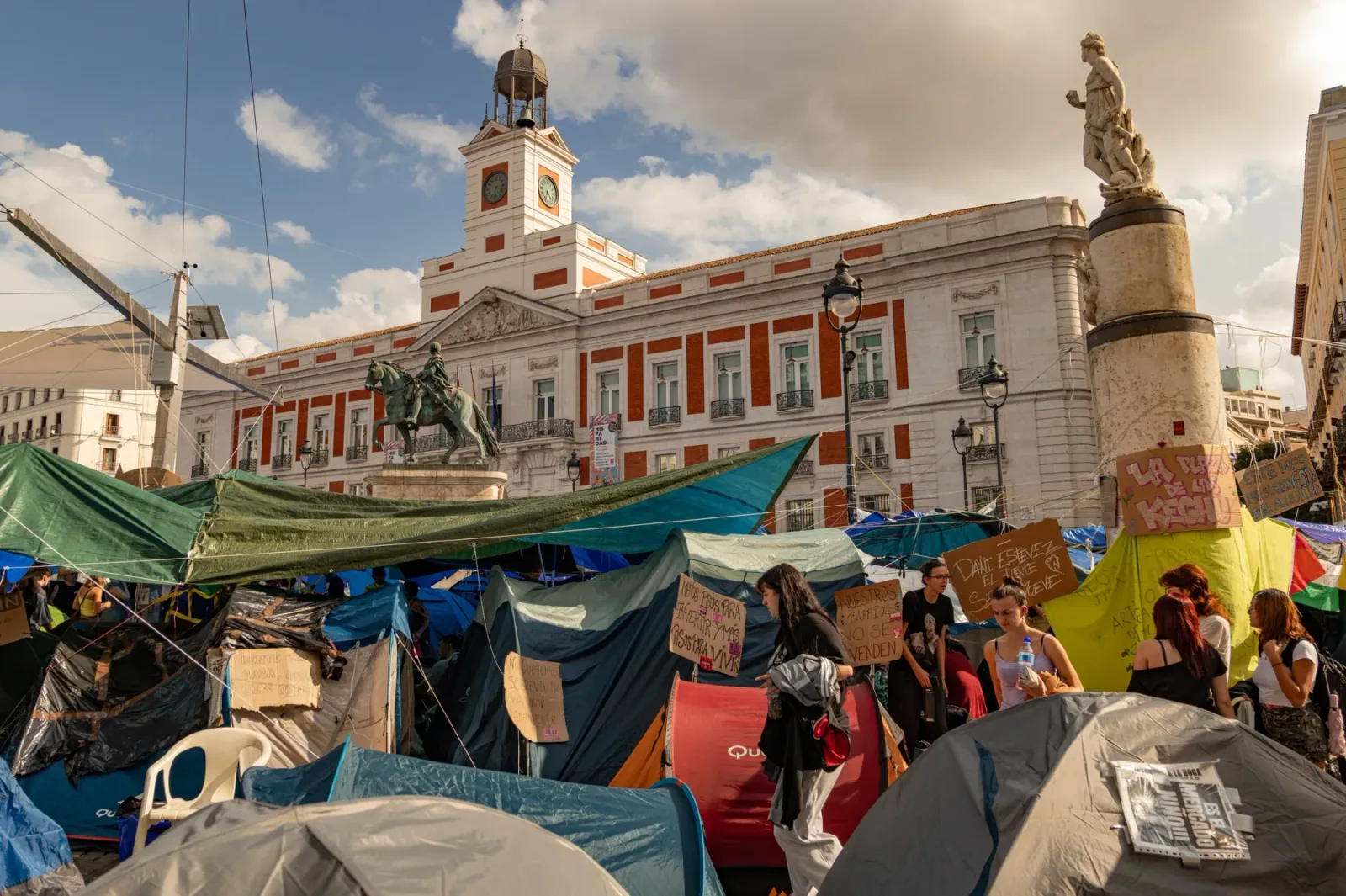
A giant banner showing President Pedro Sánchez's smiling face hangs over the entrance to Madrid's Sol station. Just weeks earlier, the same square was the epicenter of the largest protests Spain has seen in decades. Thousands of people camped for days to demand solutions to a housing crisis that has become a symbol of broader discontent: the cost of living, inequality and the feeling that economic growth is not reaching those who need it most.
Spain is experiencing one of its strongest economic periods in years. Employment has risen, tourism is breaking records and the economy is growing faster than the European average. Yet less than a week before the general election on 29 November, much of the population, especially young people, does not feel that progress in daily life. Wages are not rising at the same pace as rents, and buying a home has become an unattainable dream for many families.
Housing at the centre of discontent
According to various studies, Spain needs hundreds of thousands of additional homes to meet demand. Scarcity, combined with the rise of tourism and short-term rentals, has pushed prices higher in major cities and coastal areas. In Madrid, Barcelona and other capitals, young people spend a large share of their salaries on rent, and many are forced to live with their parents well into their thirties.
The Sol protest reflects that frustration. Demonstrators are demanding not only affordable housing but also a change of direction in public policy. They believe that the national government, regional administrations and city halls have looked the other way while the problem worsened. Housing, they say, is no longer just an economic issue; it is a question of social justice.
The generational divide
The generation protesting today is the first in decades to fear living worse than its parents. Many have university degrees, precarious jobs and temporary contracts that prevent them from getting a mortgage. Although youth unemployment has fallen from the peaks of the financial crisis, it remains one of the highest in Europe. Job instability is compounded by the impossibility of moving out.